TriggerPoint GRID 1.0 Review: A $40 Foam Roller to Try Before a Massage Gun
By The Ironnook Test Desk ·
7.4
tptherapy.com
The verdict
A well-made roller that does what it claims: firmer and more targeted than a smooth tube, and tough enough to last. At 13 inches it is too short for lying along your spine, and the ridges are intense for beginners. Start here if you roll regularly and want depth. Buy a cheaper smooth roller first if you are new, and skip a massage gun until you have used one.
Best for: Regular lifters and runners who want a firm, portable roller
What we liked
Three surface zones let you vary pressure on the same muscle
Hollow EVA core holds its shape, and the maker rates it to 300 lb
Sweat-resistant surface wipes clean and does not leave dye on floors
13 x 5.5 inch size and under 1 lb fit in a gym bag
At $39.99 it costs about a quarter of a mid-range massage gun
What could be better
13 inches is too short for rolling the whole back lengthwise
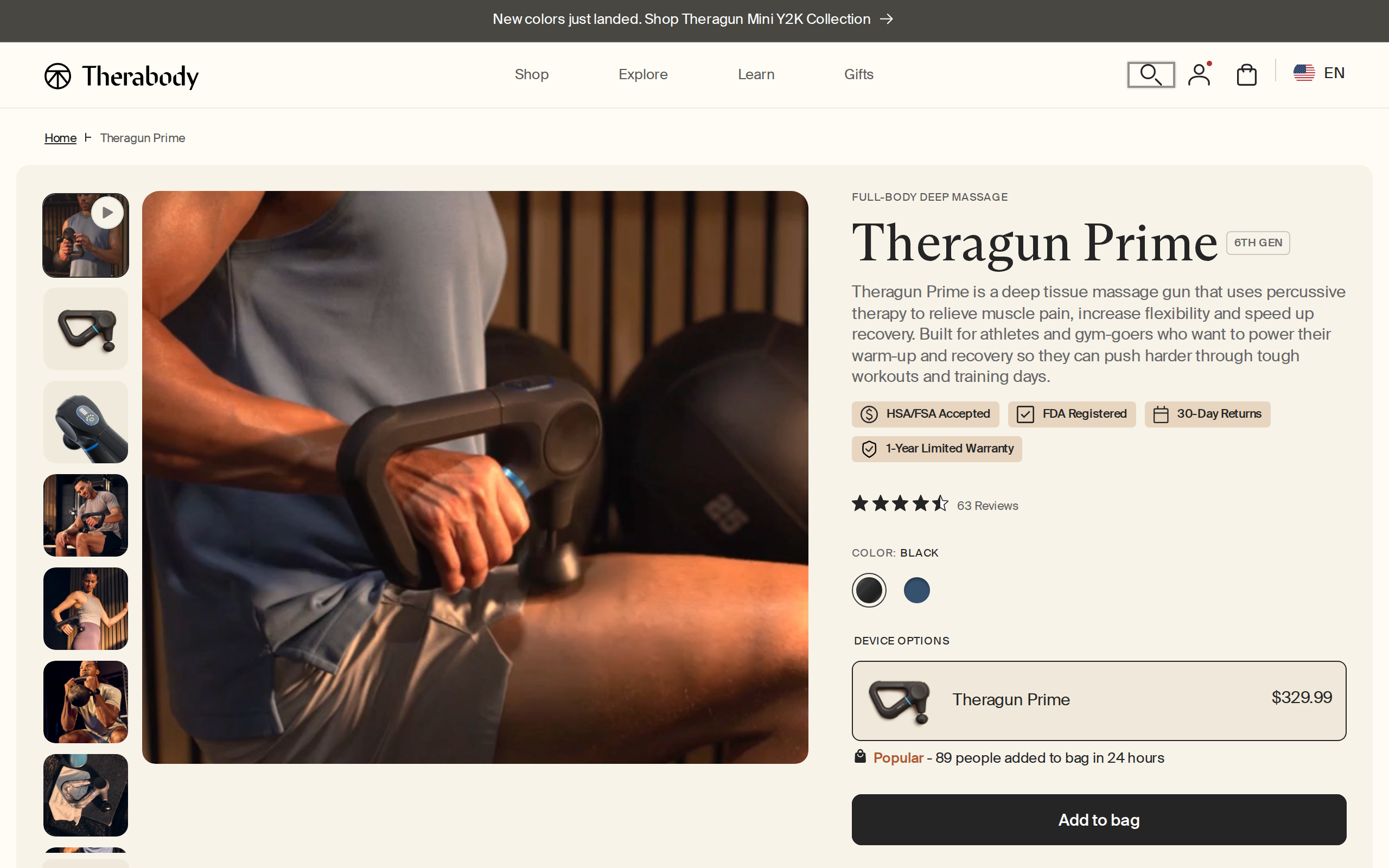
The Prime gives you the same 16 mm stroke as the dearer Theragun models for $329.99, with a long battery and a triangular handle that reaches your back. It is not quiet, the stall force is modest, and it has only two attachments. For most home lifters it is the right Theragun, but not the best massage gun per dollar.
The Hypervolt 3 Pro is the massage gun we would hand to someone who dislikes the racket of most percussion tools. It is quiet, rated at 70 lb of stall force against about 30 lb for the Theragun Prime, lasts around four hours on a charge and includes a heated head. The cost is a 14 mm stroke that goes less deep than Theragun's 16 mm, and a price $20 higher than the Prime. For most lifters it is the better buy.
8.2$349
Recovery Tools
The ridges feel intense for beginners or sensitive muscles
EVA ridges can flatten if you kneel or store gear on the roller
A 36 inch smooth roller costs less and covers more surface
Roller only presses where you place your weight, so it is slower than a gun
The GRID 1.0 is a 13 inch hollow-core roller with a three-zone textured surface for $39.99. It is firm, tough and compact, but short, and a plain roller is a gentler start.
Before you spend $150 or more on a massage gun, spend $40 on something that has no battery, no charger and no motor to fail. That is the argument for the TriggerPoint GRID 1.0, and it is mostly a good one.
What the three zones actually do
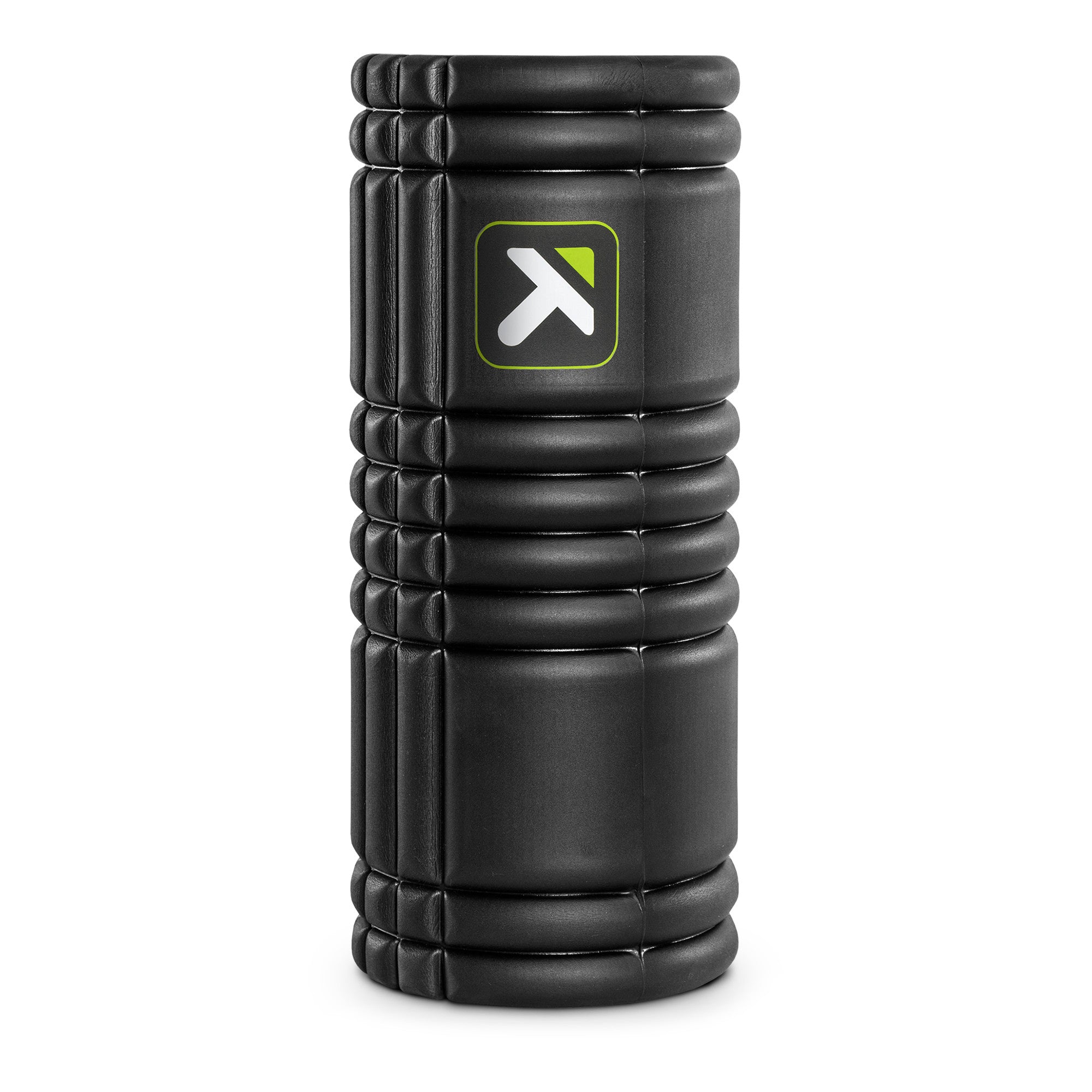
The GRID is a 13 inch tube, 5.5 inches across, made of EVA foam moulded over a hollow core. The surface carries a pattern TriggerPoint says copies a therapist's hands: flat panels like a palm, ridges like fingers, and dense nodules like fingertips.
That sounds like marketing, and partly it is. But the three textures change what the roller does. Roll on the flat panels for broad passes over quads and hamstrings, tip onto the ridges to work along a muscle, and lean onto the nodules to sit on one stubborn spot. A smooth roller only does the first of those.
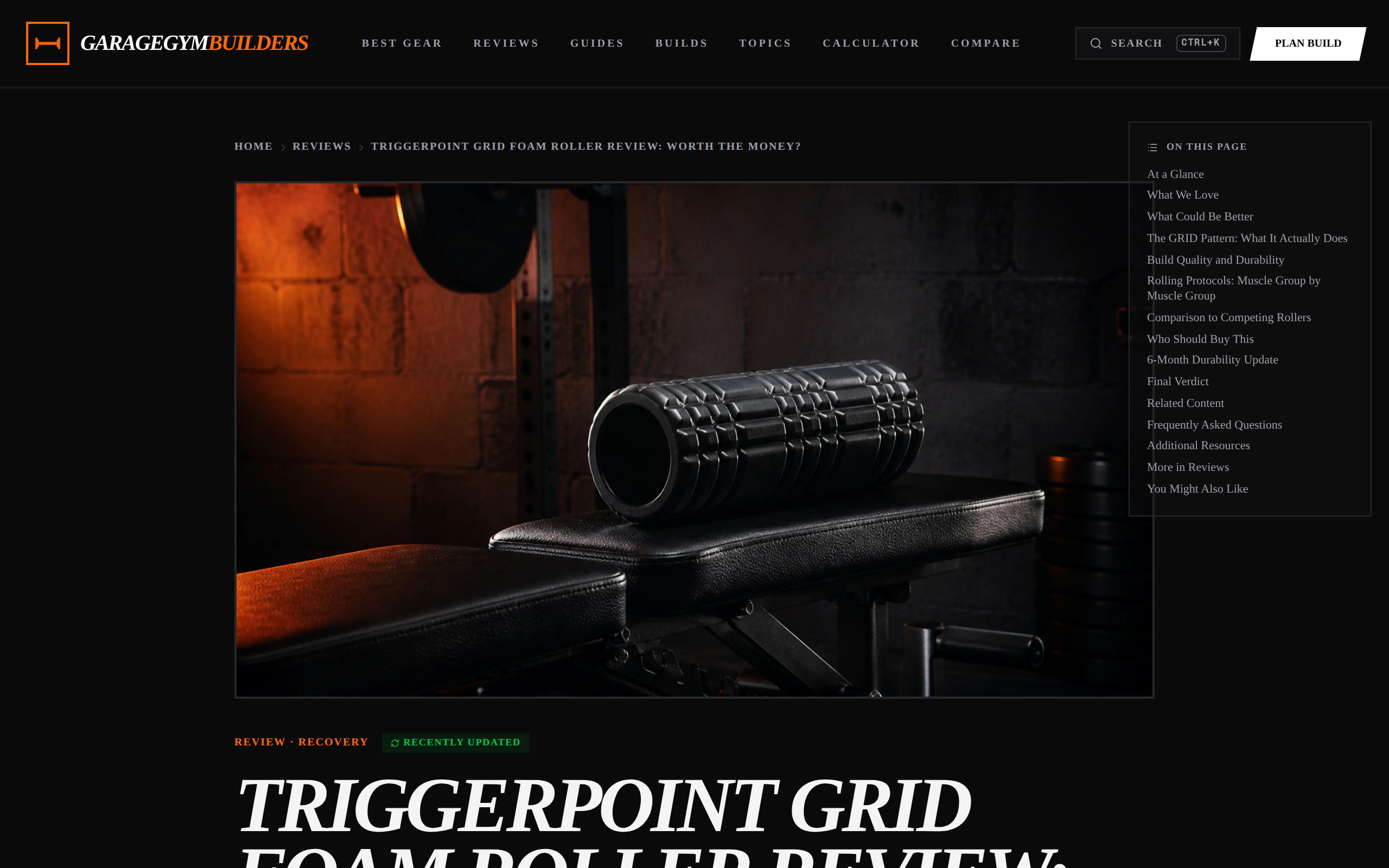
GarageGymBuilders' six-month review of the GRID, with sections on the surface pattern, build quality and rolling routines.
Firm, but not for everyone
It is firmer than entry-level rollers, and the ridges concentrate your weight into less skin. Expect the first few sessions to feel sharp on calves, glutes and the outside of the thigh. Reviewers who tested both a smooth roller and the GRID over six months came to the same advice we give: a smooth roller is the kinder first purchase, and the GRID is the upgrade once you roll regularly and the smooth surface stops being enough.
If you are recovering from an injury, older, or have a medical condition, check with a clinician before you press hard into a sore area. Nothing here is medical advice, and pain that sharpens or lingers is a reason to stop rolling.
Built to last, with one habit to avoid
The hollow core is the durable part. The maker rates it to 300 lb, and a third-party test that used it daily for six months saw no flattening of the ridges and no seam splitting. The foam did not leave dye on floors or clothes, and the surface wipes clean after a sweaty session.
The one catch is the material. EVA is softer than the EPP foam in budget rollers, so it will flatten if you kneel on it or leave gear on top of it in storage. Roll on it and put it away, and it should hold up for years. The same test also noted it weighs under a pound, so it is easy to carry to the gym.
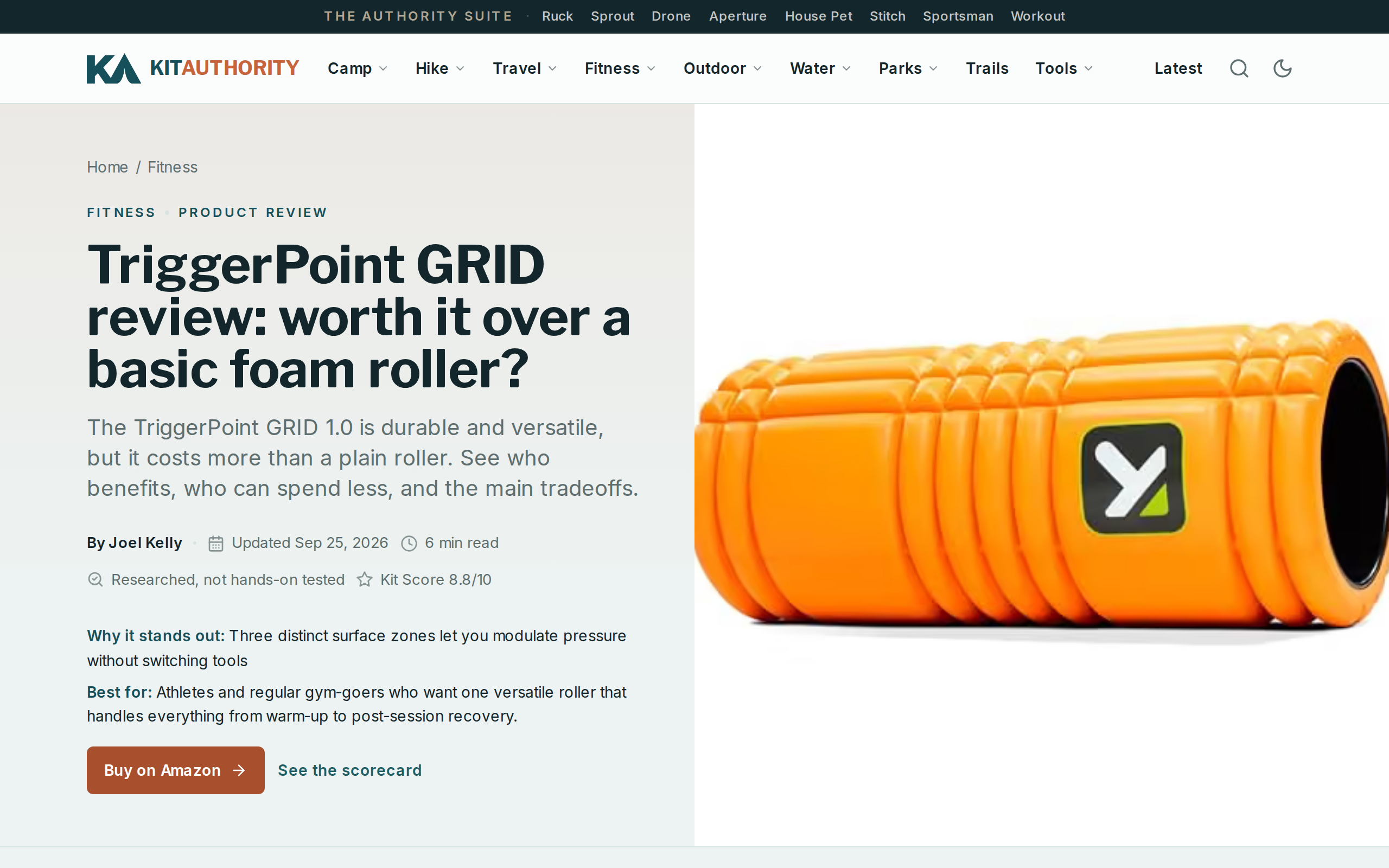
Kit Authority's page on the GRID, which sums it up as durable and versatile but dearer than a plain roller.
Where the 13 inches hurt
This is the real limitation. Thirteen inches is a good size for calves, quads, glutes and one side of the back, and a bad size for lying along your spine. You can work through the upper back segment by segment, lifting your hips as you go, but you cannot rest across it as you would on a 36 inch tube. A long smooth roller costs less and covers more.
So the sensible home setup, if you will spend $70, is both: a long, plain roller for the back and a GRID for legs and hips. If you can only buy one and you already train most days, buy the GRID.
Roller or massage gun?
A roller works by you leaning on it, so it is slower and takes more effort than a gun, and it cannot reach the back of your own shoulder. A gun is quicker and easier on a tired arm. But a roller does most of what beginners need, at a quarter of the price, and you find out whether you like self-massage before you commit.
If you do move on, our Theragun Prime review covers the model most lifters should look at, and the Hypervolt Go 3 review covers a cheaper, smaller option. We would still keep the GRID on the floor of the spare room: they do different jobs.
A Gulf News consumer review, which calls the textured roller a favourite for mobility and recovery.
Buy it or skip it
Buy the GRID 1.0 if you lift or run several times a week, you want a firm roller that fits in a bag, and you do not mind a few uncomfortable first sessions. It is a very good $40 tool.
Skip it if you are brand new to rolling and want the gentlest start, or if your main need is a roller for the length of the spine. In both cases a cheaper, longer, smooth roller is the better first buy. The GRID is a fine second one.
Normatec 3 Legs are well built, quiet and easy to run, and they do take the edge off leg soreness. The research says that edge is small, mostly perceptual, and it costs $899. They make sense for high-mileage runners and cyclists with a recovery habit. A lifter training three days a week should buy a foam roller and a massage gun first.