Theragun Mini Plus Review: You Pay $60 Extra for Heat, Not Power
By The Ironnook Test Desk ·
6.4
therabody.com
The verdict
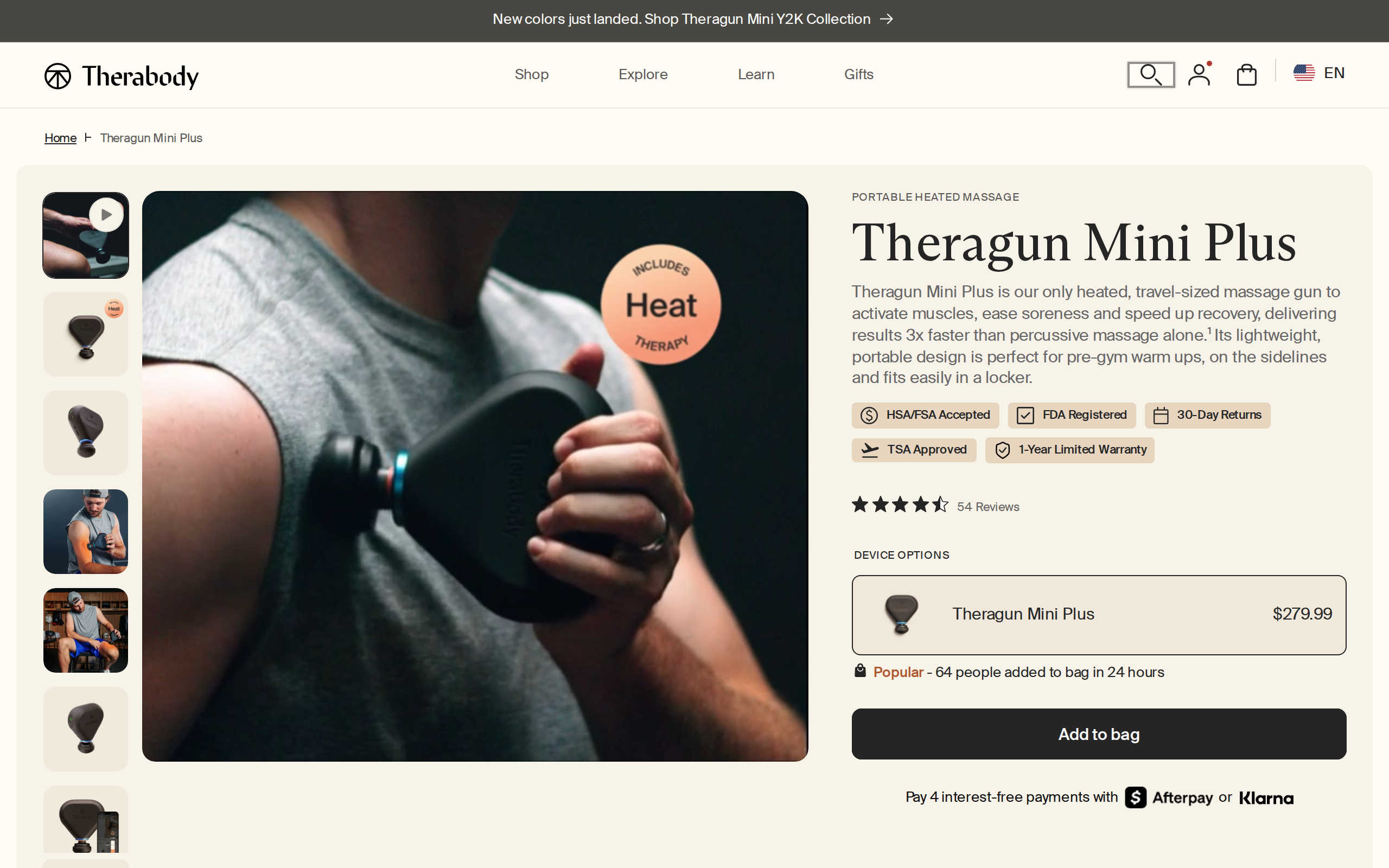
The Mini Plus is a heated pocket massage gun, and that heat is all the extra money buys. It has one attachment in the box, 10 mm of amplitude and about 20 lb of stall force, so it is gentler than the plain Theragun Mini. Choose it for travel and warmth. If you want depth or value, buy the plain Mini or a Hypervolt Go.
Best for: Travelers who want a quiet, heated pocket massage gun
What we liked
Heated head with three settings warms to 131 F, per MedGrade
Quiet enough for a hotel room or shared office
Compact body with a travel lock and pouch in the box
Bluetooth link to Therabody's Coach app for guided routines
30-day returns and a one-year limited warranty
What could be better
$279.99 is about $60 above the standard Theragun Mini
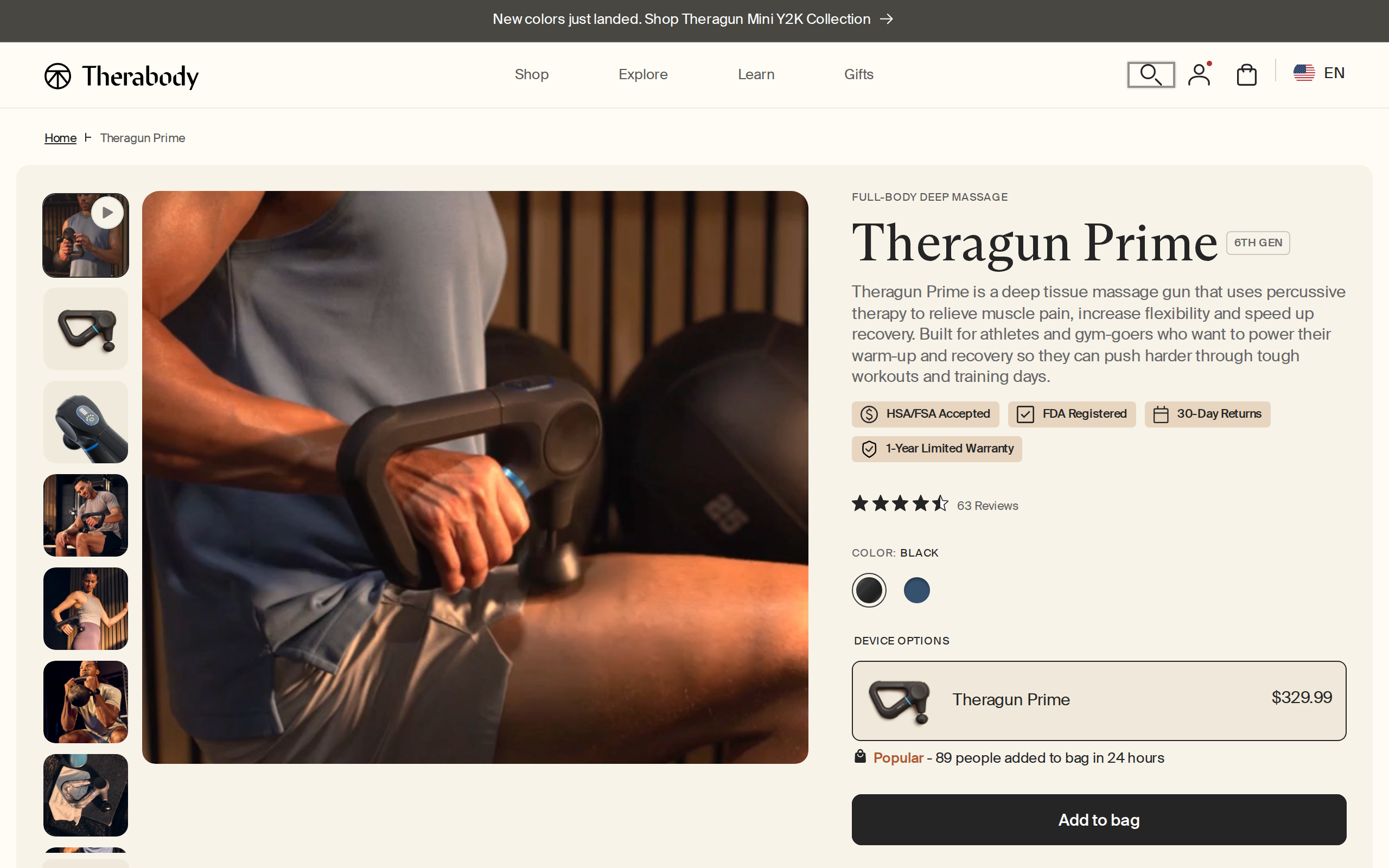
The Prime gives you the same 16 mm stroke as the dearer Theragun models for $329.99, with a long battery and a triangular handle that reaches your back. It is not quiet, the stall force is modest, and it has only two attachments. For most home lifters it is the right Theragun, but not the best massage gun per dollar.
The Hypervolt 3 Pro is the massage gun we would hand to someone who dislikes the racket of most percussion tools. It is quiet, rated at 70 lb of stall force against about 30 lb for the Theragun Prime, lasts around four hours on a charge and includes a heated head. The cost is a 14 mm stroke that goes less deep than Theragun's 16 mm, and a price $20 higher than the Prime. For most lifters it is the better buy.
8.2$349
Recovery Tools
Only the heated head is included, and the cold head adds $99.99
10 mm amplitude is gentler than the standard Mini's 12 mm
MedGrade ranked it 24th of 28 guns for clinical performance
Rivals such as the Hypervolt Go cost about half as much
The $279.99 Mini Plus adds a heated head to Therabody's pocket gun but ships with one attachment and a shorter 10 mm stroke. It is quiet and portable, and it costs more than rivals.
If you came to this review expecting a Theragun Mini with more heads and more power, the first thing to know is that the Mini Plus is neither. It ships with one attachment, and its amplitude is shorter than the plain Mini's. What the extra $60 buys is a single feature: a heated head. Whether that is worth paying for depends on how you feel about warming up a cold muscle at an airport gate.
What Plus actually means
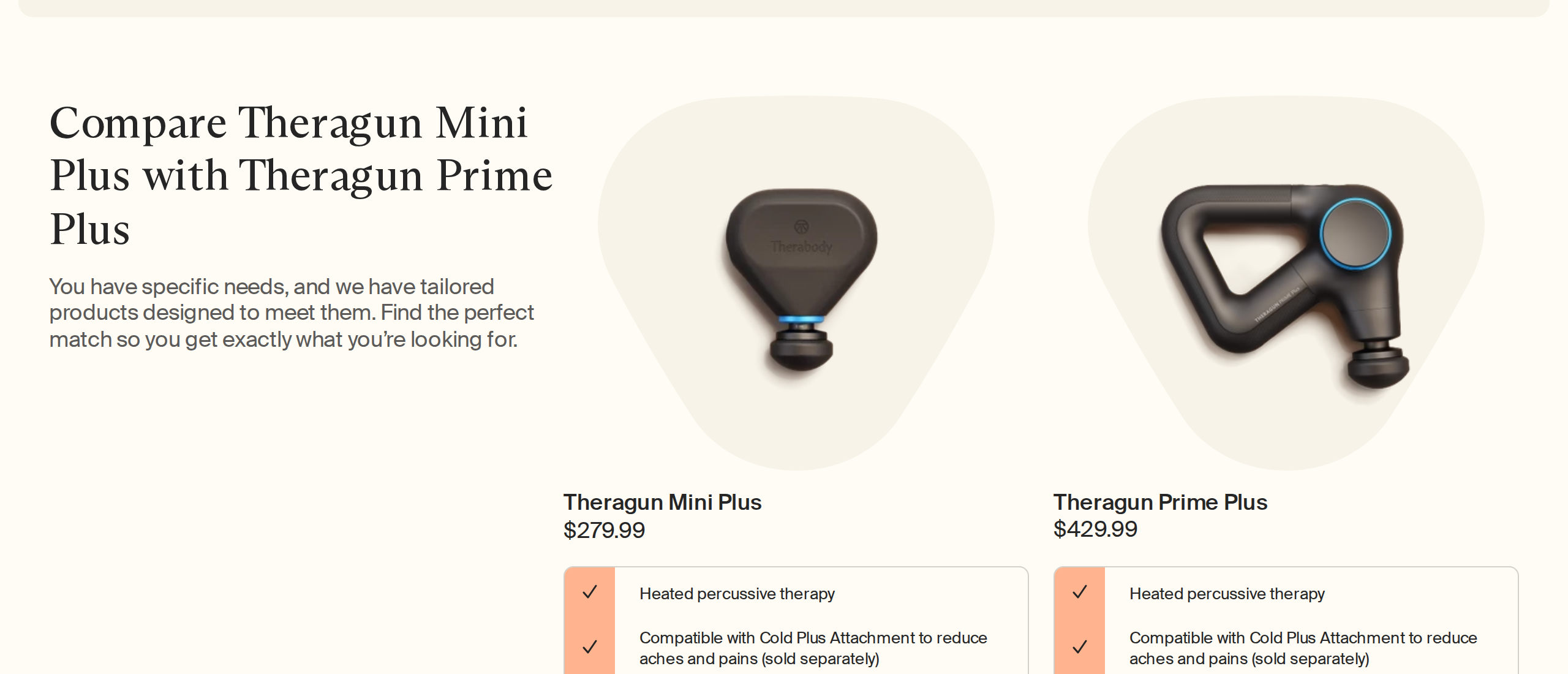
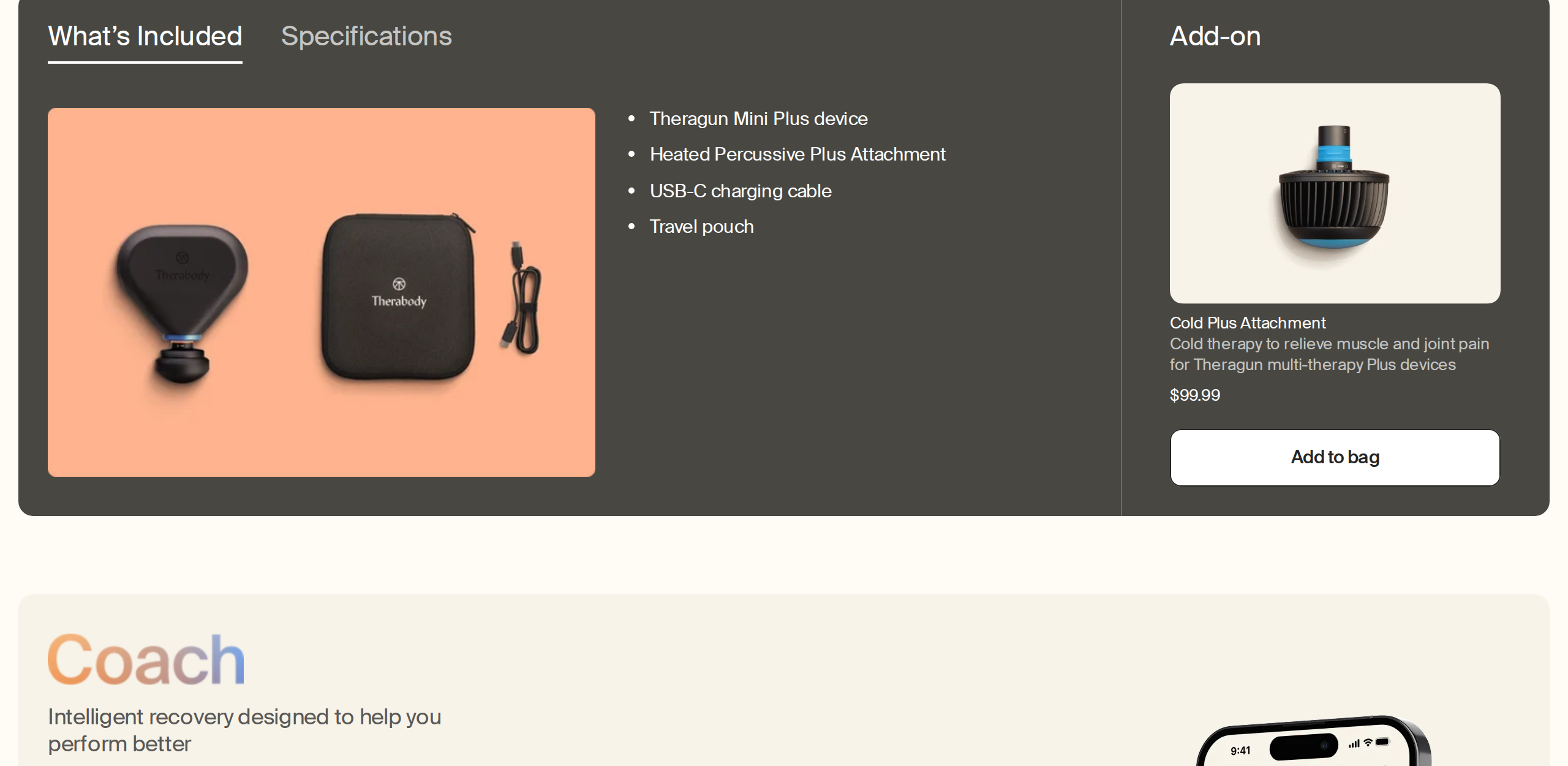
The Mini Plus is Therabody's pocket gun with a heated percussive attachment, a USB-C cable and a travel pouch in the box. Therabody sells it for $279.99. The plain Theragun Mini sits around $220, and the full-size Prime Plus is $429.99 on the maker's comparison panel.
Therabody's own comparison puts the Mini Plus at $279.99 and the Prime Plus at $429.99.
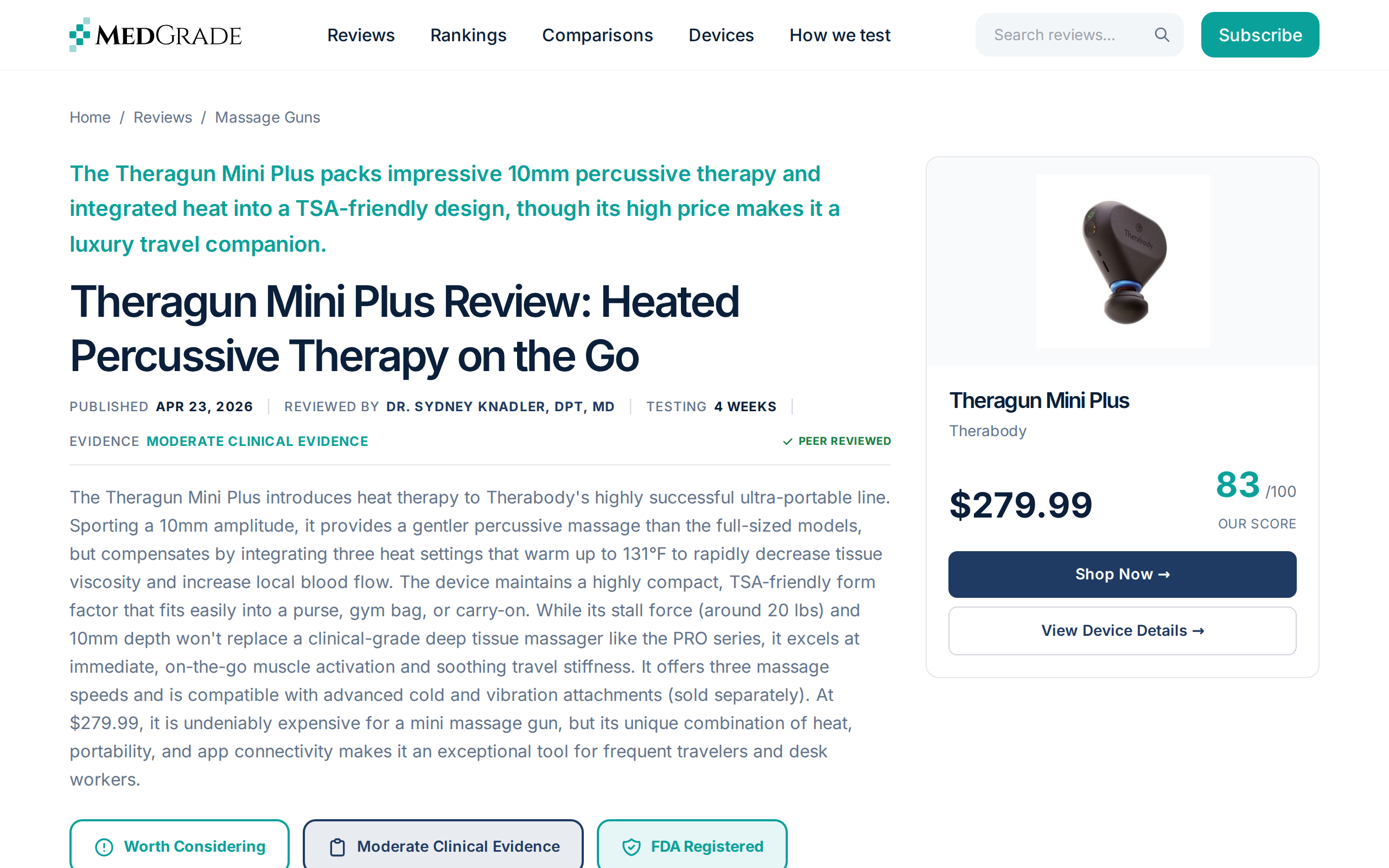
That heated head is the whole difference. MedGrade lists it at three heat settings, warming to 131 °F, with 10 mm of amplitude, three speeds and a stall force of about 20 lb. The standard Mini runs 12 mm, according to comparison sites we checked, so the more expensive gun moves less. Heat is a comfort feature and Therabody's marketing claims it speeds recovery up to three times over percussion alone, a figure from the maker's own footnotes that we would treat with caution.
In the box: the gun, a travel pouch, a USB-C cable and the heated attachment. The cold head costs extra.
The attachment story
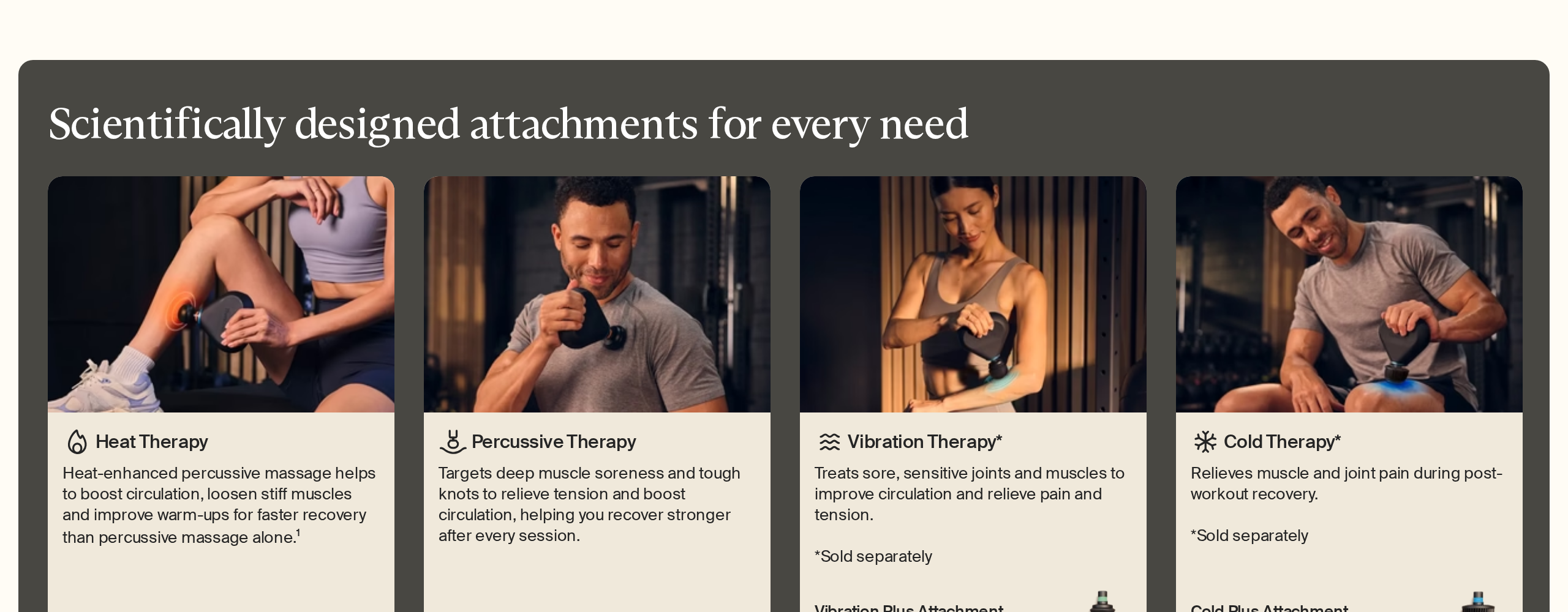
Here is where the "extra heads" assumption falls apart. Therabody sells a Vibration Plus head and a Cold Plus head, each separate, with the cold one listed at $99.99. Add the cold head alone and the pocket gun costs almost $380.
Heat and percussion come in the box. Vibration and cold are sold separately.
For most people the heated head alone is the reason to buy this model, and it is a modest reason. Warmed tissue feels looser before a session, and a hot head on a sore neck is nice. It will not make a 10 mm gun reach deep into a quad, and it will not change how a sore hamstring feels the next morning. Think of it as a warm-up tool that happens to work as a massager, not a recovery device.
How it feels to live with
Size is the reason pocket guns exist, so we start there. A full-size gun lives in a drawer at home. A mini goes in the gym bag, the carry-on and the desk, which means it actually gets used on days when the big one would stay behind.
Therabody lists 31.2 oz and a 6.1 by 4.5 by 5.1 in body, with a rated 120 minutes on a charge that varies by attachment. That makes it fit a gym bag and a carry-on, and it has a travel lock so it does not switch on in a case. The triangle grip is the same shape that people liked on the standard Mini. The app, which adds guided routines and wearable links through Therabody's Coach feature, is optional.
Noise is the other upside. MedGrade rates it quiet enough for an office or hotel room. If you share a flat, that matters more than another millimetre of travel.
Where it loses
MedGrade's review calls the 10 mm stroke gentle and the price a luxury.
Power. MedGrade's testing ranked it 24th of 28 guns for clinical performance, and put the main drawback in plain words: 10 mm is gentle. If you want to work a glute or a tight calf hard, the cheaper Mini does it better, and a full-size Theragun Prime does it better still. Our Theragun Prime review covers that bigger gun.
It also trails on price against rivals. MedGrade lists a Hypervolt Go at $149 in its price comparison, roughly half what Therabody asks here. Hyperice also sells a heated attachment for its guns, at $59 according to a comparison site, and that route gets you warmth without paying for the brand premium of a whole new gun.
Who should buy it
Buy it if you travel, you want warmth in a pocket gun, and you do not need depth. It suits desk workers, runners warming up before a session, and anyone who likes heat on sore muscle. Skip it if your goal is deep pressure, if you are watching the budget, or if you were hoping the Plus meant more of everything. In that case the plain Mini at about $220, or a Hypervolt Go, is the better purchase. For us, the Mini Plus is a pleasant gadget that charges a high price for a warm head.
Normatec 3 Legs are well built, quiet and easy to run, and they do take the edge off leg soreness. The research says that edge is small, mostly perceptual, and it costs $899. They make sense for high-mileage runners and cyclists with a recovery habit. A lifter training three days a week should buy a foam roller and a massage gun first.