Peloton Cross Training Bike+ Review: Is $1,000 Extra Worth It?
By The Ironnook Test Desk ·
7.7
onepeloton.com
The verdict
The Bike+ is the best-riding connected bike we know of, and its swivel screen, auto-resistance and rep-counting camera do make off-bike strength classes easier to follow. It is also $1,000 more than the Bike, needs a $49.99 monthly membership, and reviewers report screen wobble and early creaks at this price. Buy it if you will use rides, strength and mobility every week. A cyclist who only rides should buy the Bike.
Best for: Riders who also want strength and mobility classes on one machine
What we liked
Auto-resistance follows instructor targets without touching the knob
23.8 inch screen swivels for floor and strength classes
Peloton IQ camera counts reps and flags form on standing moves
Sonos-tuned speakers and a three-speed fan are built in
Compact footprint of roughly 4 by 2 feet, 54 by 22 by 60 inches
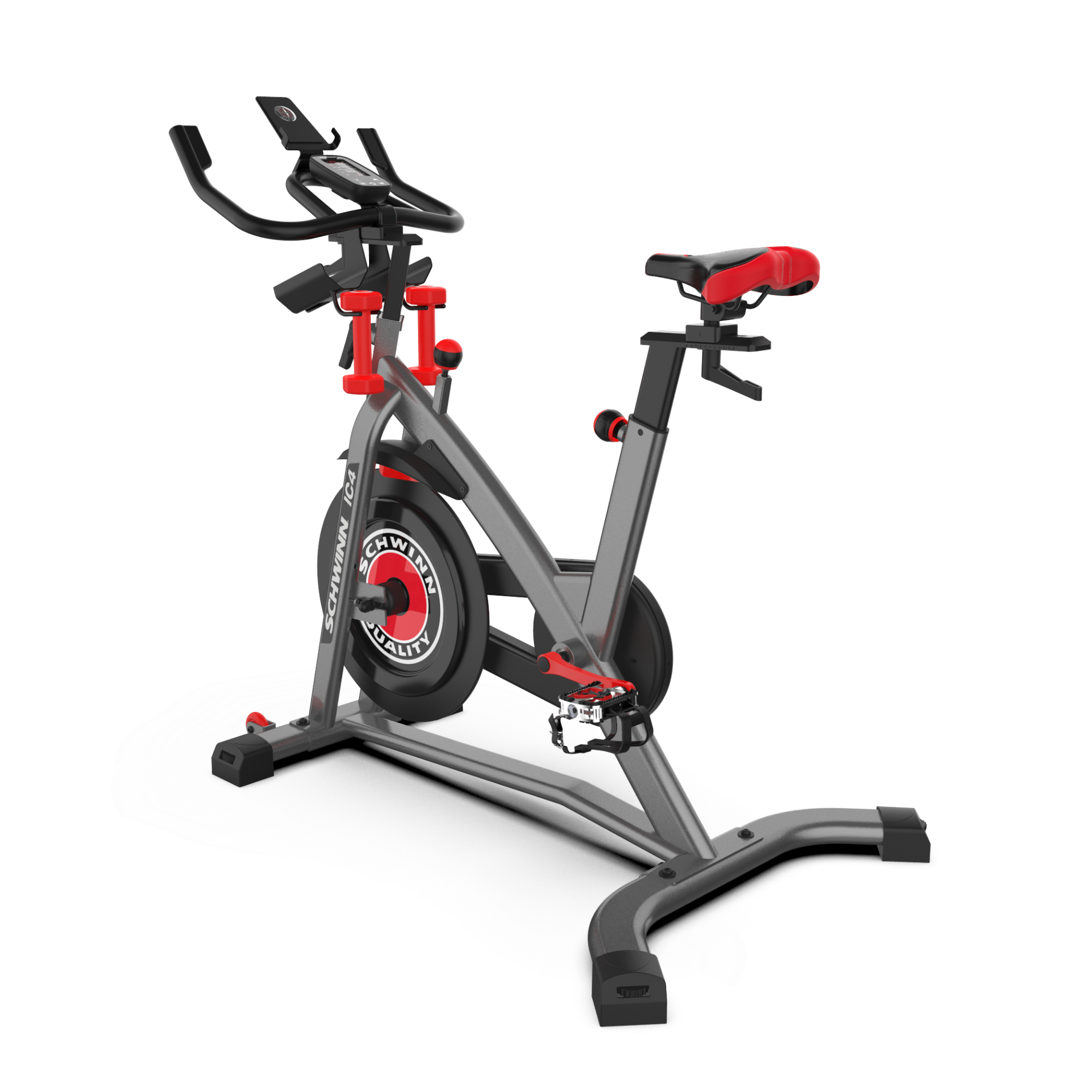
The IC4 is the best-value spin-style bike for someone who already owns a tablet and wants to pick their own apps. It rides smoothly, fits a wide range of riders and costs no subscription to use. The cost is manual resistance, so apps cannot change the load for you. If you want that, spend more or look elsewhere.
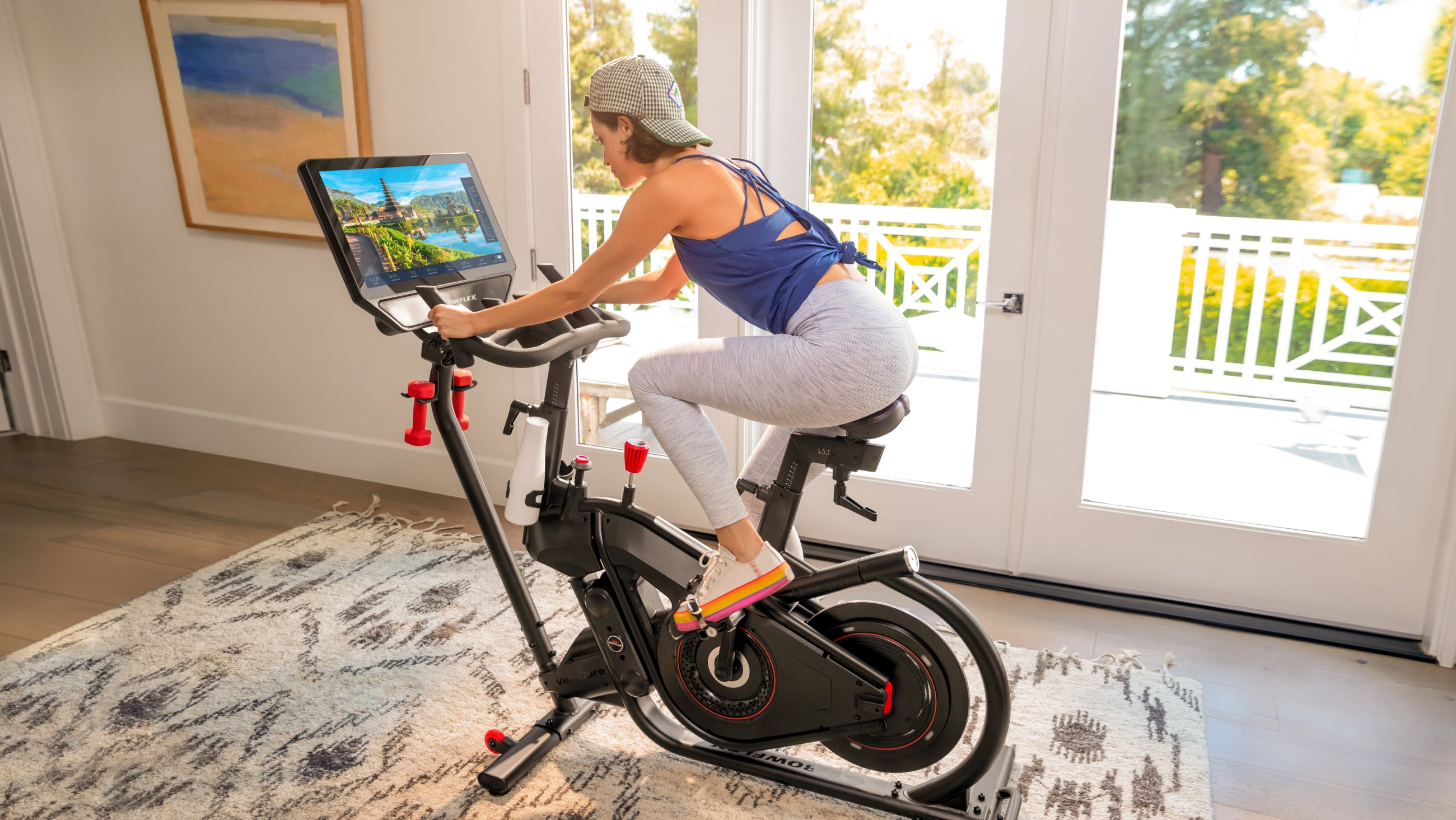
Lean mode is real: it recruits your obliques and makes rides more engaging, and the bike underneath is quiet, stable and holds 325 lb. But the lean is a nice extra, not a second workout, JRNY adds $149 a year, and the two year frame warranty is short. Buy it near $1,000. At $2,199 it is overpriced.
The Bike+ costs $2,695 and adds a swivel screen, auto-resistance and AI rep counting over the $1,695 Bike. With the monthly membership added, we ask who actually benefits.
Here is the question buyers keep asking us: a Peloton Bike costs $1,695, the Bike+ costs $2,695, so what does the extra $1,000 buy? The honest answer is three things: a bigger screen with a full 360 degree swing, resistance that adjusts itself, and a camera. Whether they are worth that much depends on what you do when you climb off the saddle.
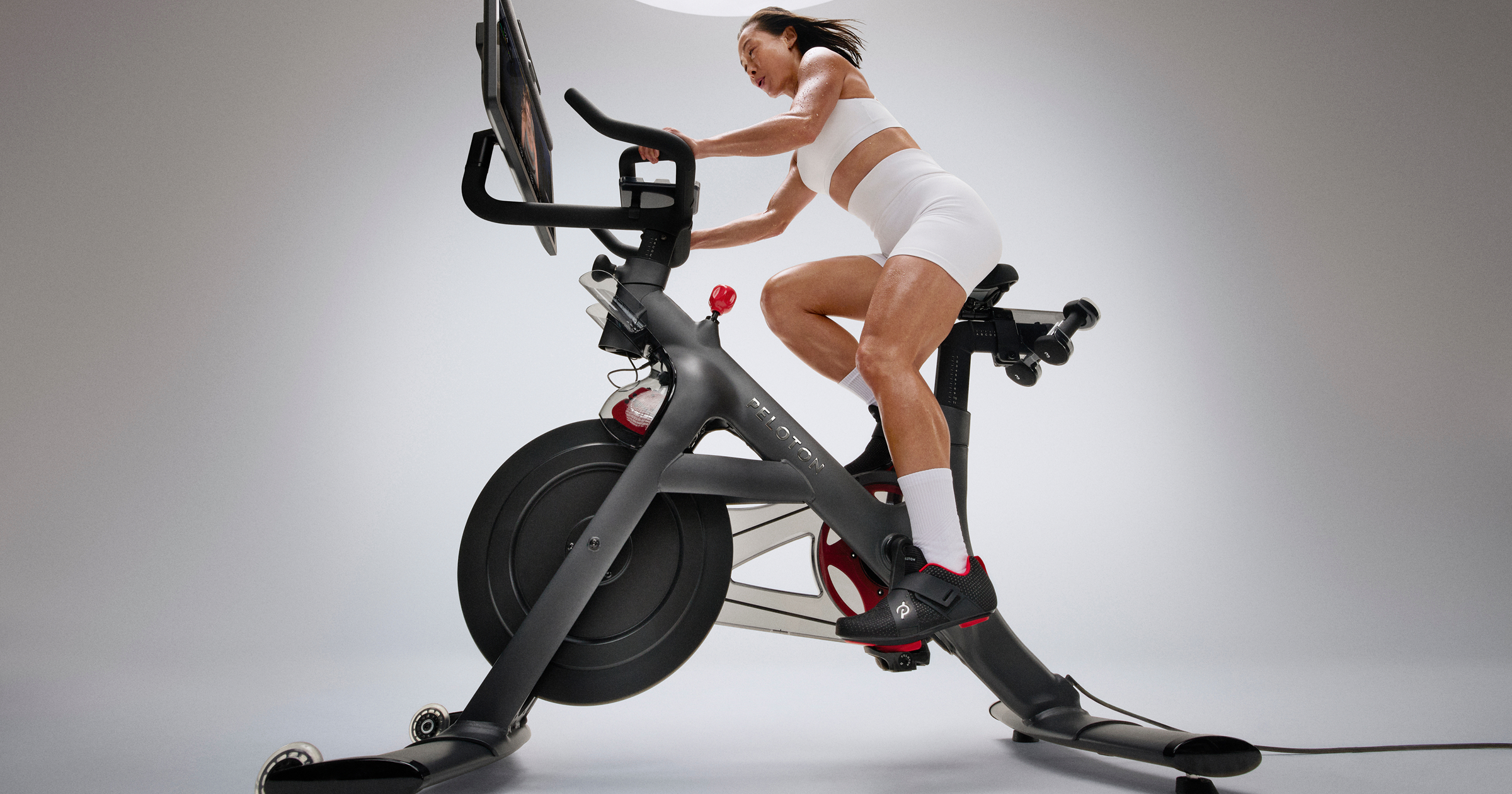
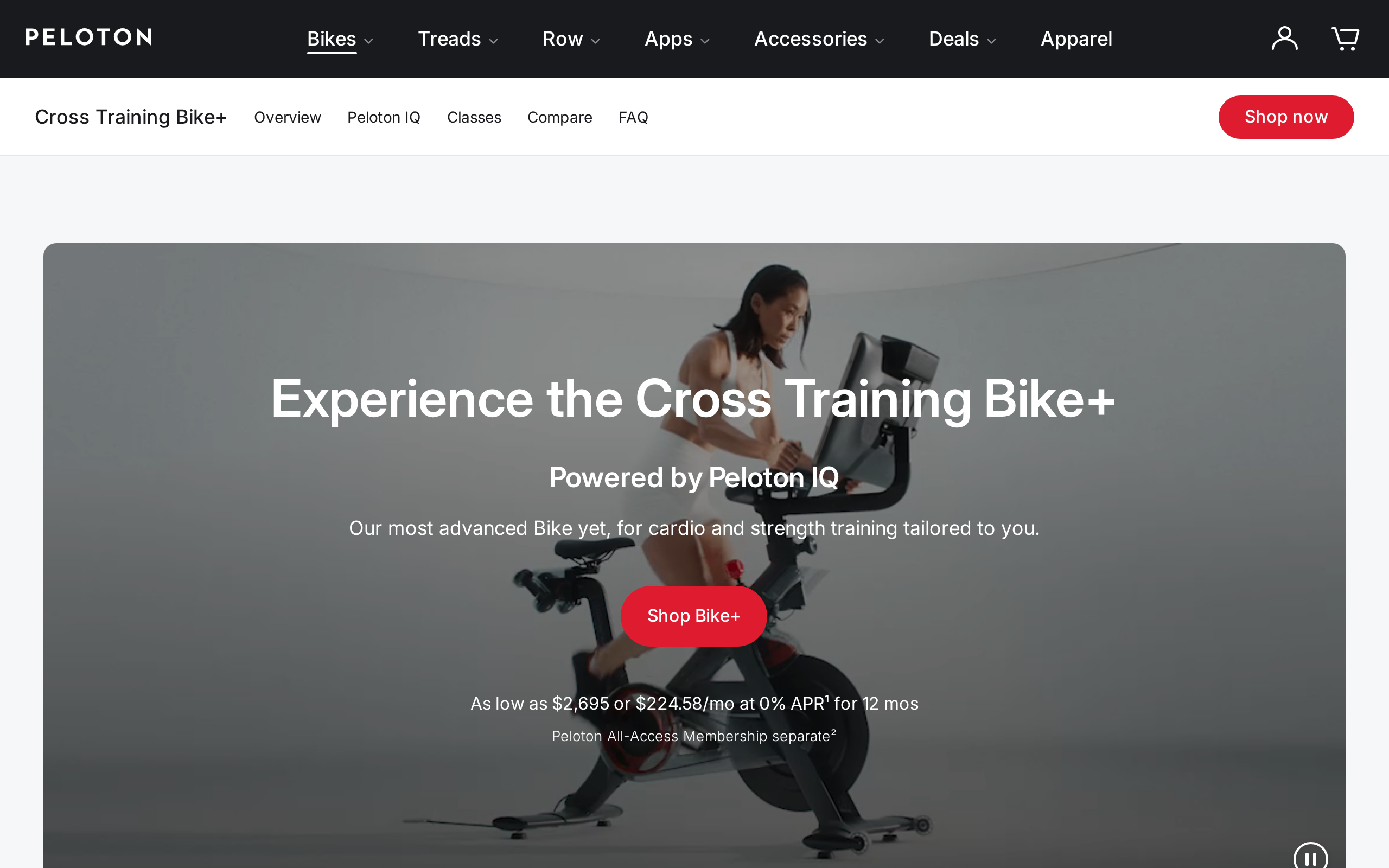
Peloton's page for the Bike+: from $2,695, or $224.58 a month at 0% APR for 12 months, with the All-Access Membership sold separately.
What the extra $1,000 adds
Peloton lists the Bike+ at $2,695 (financing works out to $224.58 a month for 12 months at 0% APR). Against the Cross Training Bike at $1,695, the upgrade list is short:
A 23.8 inch Full HD screen that rotates 360 degrees, against 21.5 inches on the Bike, which Peloton also describes as a swivel screen.
Auto-resistance, which moves the load to match what the instructor asks for.
Sonos-tuned speakers, plus a built-in three-speed fan.
A camera that powers Peloton IQ, the movement-tracking software.
Peloton gives the Bike+ a footprint of about 4 by 2 feet, listed as 54 inches long, 22 wide and 60 tall.
Auto-resistance is the real upgrade
On the standard Bike you turn a knob when an instructor says "add a quarter turn". On the Bike+ the knob does that for you, in sync with the class. It sounds minor. In a 45 minute interval ride it is the difference between chasing numbers and just pedalling, and it works well. You can take over manually whenever you like.
The swivel screen and the camera
The 360 degree swing is what makes a bike useful for strength and yoga: swing the screen round, get off, and the instructor is facing your mat. Peloton IQ uses the camera to count reps and, according to a six-month review at Steady Athlete, spots basic form faults. It works best on standing moves such as squats and lunges and is less accurate on the floor.
That review also reports a wobble in the screen at high intensity, plus creaking handlebars and pedal squeaks in the first month, which tightening the bolts partly cured. That is a fair complaint at $2,695, and the touchscreen and components carry only a 12-month warranty. The frame gets five years.
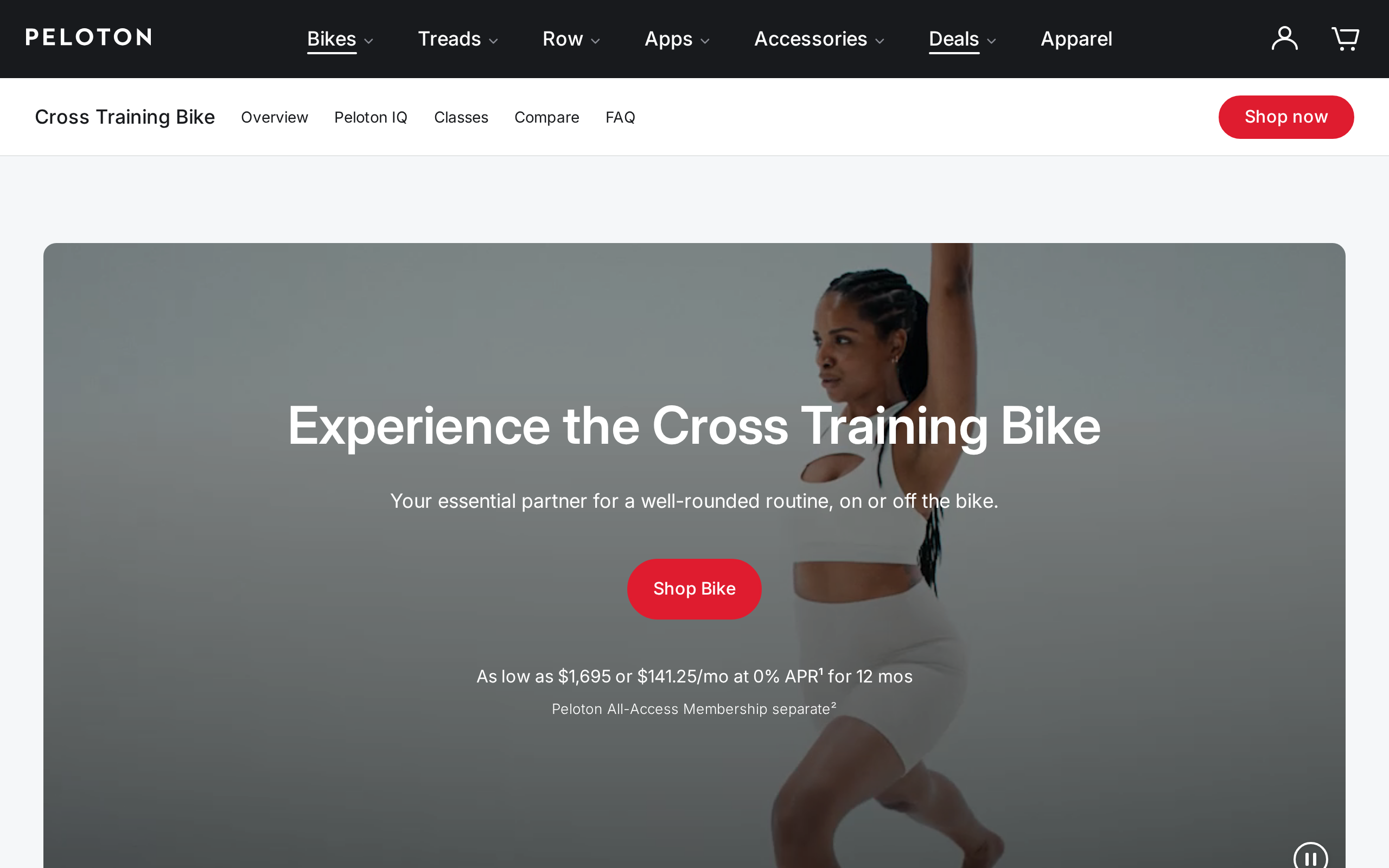
The standard Cross Training Bike's page: from $1,695, or $141.25 a month. This is the machine the Bike+ has to beat.
The membership changes the maths
The bike alone does very little. Classes need Peloton's All-Access Membership, which reviewers now put at $49.99 a month, or about $600 a year. Peloton also sells cheaper app tiers for people without its hardware: App One at $12.99 a month, App+ at $28.99, and Strength+ at $9.99.
Peloton's membership page. The app tiers are cheaper, but they are for people riding something other than a Peloton.
Put it together over three years. The Bike+ is $2,695 plus roughly $1,800 in membership, about $4,500. The Bike is $1,695 plus the same membership, around $3,500. A ride three or four times a week costs about $3 to $4 a class, which is easy to justify. Twice a month, it is about $22 a ride, and a cheaper option will do the same job.
The rivals you should price first
The obvious alternative is NordicTrack's X24 Bike, listed at $2,299 with a 24 inch screen and incline and decline motors, though it ties you to iFIT instead. Peloton's edge is class quality and a community that is still large. NordicTrack's edge is a lower sticker price and a bike that tilts like a road. If neither subscription appeals, any spin bike with a tablet holder lets you stream whatever you like for nothing extra.
Warranty matters too. The frame is covered for five years but the touchscreen and components for only 12 months, so price the optional Protection Plan Peloton sells before you check out.
Who should buy it, and who should not
The Bike+ makes sense if you will actually use cycling, strength and mobility in the same week. It replaces a gym membership, a yoga app and a spin bike, and the swivel and camera are for that crowd. Peloton's AI strength features are the only reason to pay $1,000 over the Bike.
Do not buy it if you want to ride and nothing else. The standard Bike gets you into the same classes on the same $49.99 bill for $1,000 less. Do not buy it if you dislike subscriptions either. A bike with a basic console can cost a third as much and ask for nothing monthly.
Our rating is 7.7. The ride is first class and auto-resistance is a real convenience. But the screen wobble reports, the short touchscreen warranty and the lifetime cost keep it out of the 8s. We would buy the Bike+ for a household that trains in more than one way, and the Bike for everyone else.
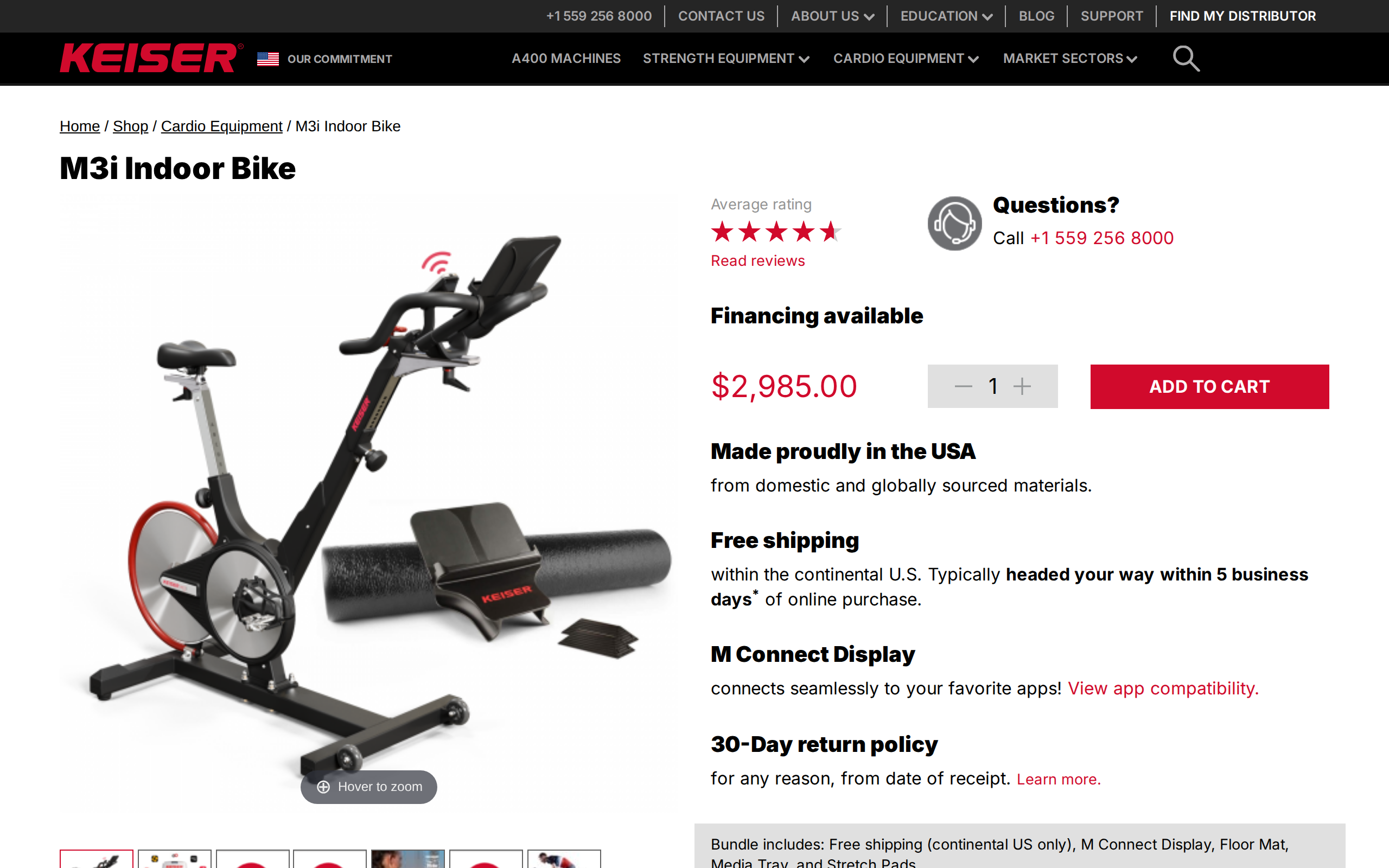
The M3i is the bike for riders who already own a tablet and a favourite app and want the sturdiest, quietest, lowest-maintenance machine to pair with it. Power readings are consistent and the build is commercial. But resistance is manual, there is no screen or content, and $2,985 is a lot to pay for what a $1,000 smart bike partly does for you.